


Whether managing a municipal drinking water system, wastewater treatment facility, industrial process, or commercial water application, operators need accurate, real-time information to ensure water quality remains within acceptable limits. After all, changes in water chemistry can occur quickly, and without reliable monitoring, small issues can develop into significant operational challenges, regulatory violations, or safety concerns.
Among the many water quality indicators that facilities track, four of the most important parameters are pH, oxidation-reduction potential (ORP), conductivity, and temperature. pH helps operators understand water acidity and alkalinity, which directly affects chemical treatment processes. ORP serves as an indicator of disinfection effectiveness and overall oxidation conditions. Conductivity measures the ability of water to conduct electricity, providing information about dissolved solids and potential contamination. And, finally, temperature influences chemical reactions, biological activity, and the accuracy of many water quality measurements.
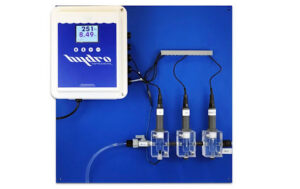
The WQM-100 Water Quality Monitor from Hydro Instruments is designed to reliably track these essential water quality parameters in real time. This enables facilities to gain the information needed to optimize treatment processes, improve operational efficiency, and maintain regulatory compliance.
Understanding pH Measurement
One of the most fundamental water quality parameters is pH, which indicates the concentration of hydrogen ions present in water. The pH scale ranges from 0 to 14, with a value of 7 considered neutral. Values below 7 indicate acidic conditions, while values above 7 indicate alkaline or basic conditions.
Disinfection processes often depend on maintaining proper pH levels to maximize the effectiveness of chlorine and other disinfectants. If pH drifts outside the recommended range, treatment efficiency may decline, requiring increased chemical usage and higher operating costs.
Maintaining proper pH levels is also essential for protecting infrastructure and equipment. Water that is too acidic may contribute to corrosion of pipes, pumps, and treatment equipment, while highly alkaline water can increase the likelihood of scale formation. Both conditions can negatively affect system performance and increase maintenance requirements.
Because pH influences so many aspects of water treatment, accurate measurement is key. It supports stable operations, improved treatment performance, and consistent water quality.
The Importance of ORP Monitoring
Oxidation-reduction potential (ORP) is a measurement of water’s ability to either gain or lose electrons through chemical reactions. In water treatment applications, ORP monitoring is commonly used to evaluate disinfectant effectiveness. Higher ORP values (expressed in millivolts or mV) generally indicate stronger oxidizing conditions, which are often associated with more effective pathogen control. As a result, ORP serves as an important indicator of how effectively disinfectants are reacting with contaminants and microorganisms.
If ORP values fall below target ranges, operators may need to investigate potential issues such as insufficient disinfectant dosing, increased contaminant loads, or changing water chemistry. Continuous ORP monitoring allows facilities to respond quickly and maintain treatment performance while supporting public health and safety objectives.
How the Measurement of Conductivity Supports Water Quality Management
Conductivity measures water’s ability to conduct electrical current. Because dissolved ions carry electrical charges, conductivity is directly related to the concentration of dissolved substances present in water.
Common dissolved solids that affect conductivity include salts, minerals, metals, and other inorganic compounds. As the concentration of dissolved ions increases, conductivity readings generally increase as well. Conversely, low conductivity often indicates relatively pure water with fewer dissolved solids.
Conductivity monitoring is particularly useful in industrial applications, cooling systems, boiler feedwater processes, and wastewater treatment operations where dissolved solids directly impact performance. By continuously tracking conductivity, operators can identify trends, detect abnormalities, and make informed decisions regarding treatment adjustments and process optimization.
Why Temperature Monitoring Matters
Water temperature affects nearly every aspect of water treatment and quality management. Even relatively small temperature fluctuations can influence chemical reactions, biological activity, and overall treatment performance. Warmer water generally accelerates reaction rates, while colder water can slow them down.
Temperature also impacts sensor accuracy and measurement interpretation. This is because parameters such as pH and conductivity are temperature-dependent, meaning temperature changes can influence sensor readings. Monitoring temperature alongside these measurements allows for proper compensation and improved data accuracy.
Overall, tracking temperature helps operators make better decisions and maintain more consistent treatment results.
How the WQM-100 Monitor Helps Facilities Improve Performance
The WQM-100 Water Quality Monitor provides facilities with a powerful tool for managing critical water quality parameters. By continuously measuring pH, ORP, conductivity, and temperature, the system delivers real-time information that supports informed operational decision-making.
This, in turn, leads to an array of advantages:
- Timely Adjustments: Rather than relying solely on periodic manual testing, facilities can maintain continuous visibility into system performance and respond more effectively to changing conditions.
- Improved Operational Efficiency: Accurate measurements help optimize chemical dosing, reduce waste, and support more effective treatment processes.
- Regulatory Compliance: Continuous monitoring records can assist operators in documenting performance and maintaining compliance with applicable requirements.
- Proactive Management: Early detection of abnormal conditions allows operators to resolve issues in the long term, reducing downtime, lowering maintenance costs, and improving overall system reliability.
Choose Hydro Instruments for Advanced Water Quality Monitoring Solutions
Effective water treatment depends on accurate, dependable data. Hydro Instruments is committed to providing innovative monitoring solutions that help facilities maintain high standards of performance, efficiency, and safety. One such solution is the WQM-100 Water Quality Monitor. This system delivers reliable real-time measurement of pH, ORP, conductivity, and temperature, giving operators the information they need to make confident decisions.
In addition to the WQM-100, Hydro Instruments offers a complete range of supporting equipment designed to enhance water treatment operations, including the RPH 250 and RPH 260 residual analyzers, GA-180 gas alarm, calibration columns, and open channel diffusers. Together, these solutions help facilities achieve greater operational control, improved treatment performance, and regulatory compliance.
To learn more about the WQM-100 Water Quality Monitor and Hydro Instruments’ full line of water treatment and monitoring solutions, contact our team today — email sales@hydroinstruments.com or call 215-799-0980.
Comments are closed.