


Precise chemical dosing is critical in water and wastewater treatment, industrial processing, and disinfection systems. Specifically, maintaining accurate feed rates helps facilities meet regulatory requirements, protect equipment, ensure consistent product quality, and safeguard public health. Whether a system is applying chlorine for drinking water disinfection, injecting corrosion inhibitors into a cooling system, or dosing coagulants in wastewater treatment, accuracy and reliability are essential for safe and efficient operations.
One of the key components that determines dosing precision is the type of control valve used in a chemical feed system. Both manual and automatic control valves offer distinct benefits, depending on system complexity, operational requirements, and the level of control needed. Understanding the differences between these types of valves helps facilities select the right solution for accurate and reliable chemical feed performance.
How Manual Control Valves Work
Manual control valves regulate chemical flow through direct operator adjustment. These valves typically feature a handwheel, knob, or lever that an operator turns or positions to open or close the valve and control the rate of chemical flow through the feed line.
When adjusting a manual valve, the operator sets the desired flow rate based on system requirements. This may involve referencing flow indicators, observing system conditions, or following established dosing guidelines. Once the valve is set, it remains in that position until someone manually changes it again.
Typical Applications for Manual Control Valves
Manual valves are often used in systems where chemical dosing requirements remain relatively stable. For example:
- Smaller facilities with stable flow conditions
- Applications where feed rates do not fluctuate frequently
- Systems with consistent, predictable demand
- Backup or secondary feed systems
Benefits of Manual Control Valves
- Simplicity: Because they do not rely on electronic controls, sensors, or automated components, they are typically easy to install and operate. Maintenance requirements are also generally minimal, which can reduce long-term operational complexity.
- Reliability: With fewer moving parts and no dependence on power or electronic signals, manual valves can continue functioning even in environments where automated systems may be more vulnerable to disruption.
- Lower Upfront Cost: They generally require less capital investment compared to automated systems.
Limitations of Manual Control Valves
While manual valves can be effective in stable systems, they have certain constraints:
- Limited Responsiveness: Manual valves do not automatically adjust to changes in flow rate or demand. If conditions shift, operators must manually recalibrate the system.
- Greater Reliance on Operator Oversight: Accurate dosing depends heavily on operator monitoring and intervention.
- Potential for Human Error: Manual adjustments may introduce variability, particularly during shift changes or high-demand periods.
How Automatic Control Valves Improve System Performance
Automatic control valves regulate chemical flow using sensors, controllers, and automated actuators to continuously adjust flow rates based on real-time system data.
In many chemical feed systems, automatic valves integrate with monitoring and control equipment such as flow meters, residual analyzers, programmable logic controllers (PLCs), and supervisory control and data acquisition (SCADA) systems. These devices then provide constant feedback about system conditions, allowing the control valve to respond quickly to changing demands.
Automatic valves also improve operational efficiency by reducing the need for continuous manual oversight. While operators still monitor system performance, automated control allows them to focus on higher-level system management rather than making constant adjustments.
Another important benefit is improved precision. Because automatic control valves can make small, frequent adjustments, they can maintain highly consistent chemical feed rates. This precision helps prevent overfeeding or underfeeding, which can affect treatment effectiveness, regulatory compliance, and chemical consumption costs.
Key Differences Between Manual and Automatic Valves
While both types of valves regulate chemical flow, the differences between manual and automatic control valves become clear when comparing performance, responsiveness, and operational demands.
- Dosing Precision: Manual valves can provide adequate control in stable systems, but maintaining highly precise dosing may require frequent operator adjustments. Automatic valves, on the other hand, continuously regulate flow based on real-time feedback, resulting in more consistent dosing.
- Responsiveness: When system conditions change, manual valves depend on operators to recognize the change and respond accordingly. In contrast, automatic valves can detect and react to changes immediately, helping maintain accurate dosing even in dynamic environments.
- Labor Requirements: Manual valves require periodic monitoring and adjustment, especially in systems with changing flow conditions. Automatic valves, however, reduce the need for manual intervention by regulating flow automatically.
- Adaptability: Automatic valves can adjust chemical feed rates in response to changing process variables, making them well-suited for systems where conditions fluctuate throughout the day.
- Operational Costs: While manual valves may have lower upfront costs, automated systems often improve treatment consistency, reduce chemical waste, and minimize operator workload.
Contact Hydro Instruments for Reliable Chemical Feed Solutions
Selecting the right control valve is an important step in designing and maintaining an accurate chemical feed system. Hydro Instruments provides dependable chemical feed equipment designed to support accurate dosing across a wide range of water treatment and industrial applications. Our solutions help operators maintain precise chemical feed rates while ensuring safe and efficient system performance.
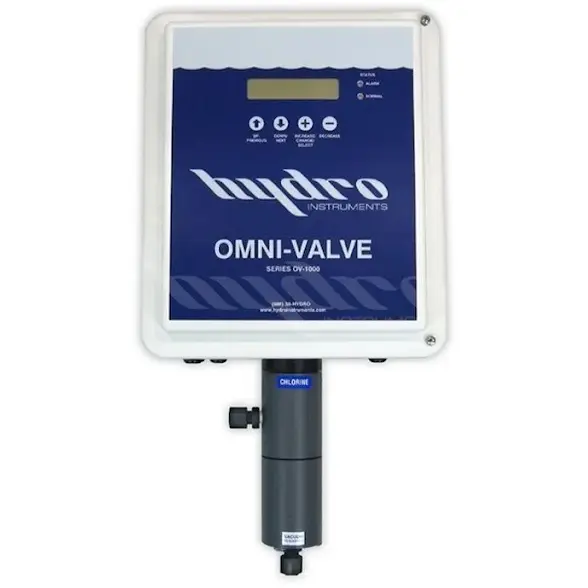
If you’re looking to improve chemical dosing accuracy, contact Hydro Instruments for dependable gas feed equipment and control systems (such as the OV-110 automatic control valve, the OV-1000 automatic valve, or a chlorine pressure reducing valve). Each solution is designed to support reliable treatment operations.

Comments are closed.