


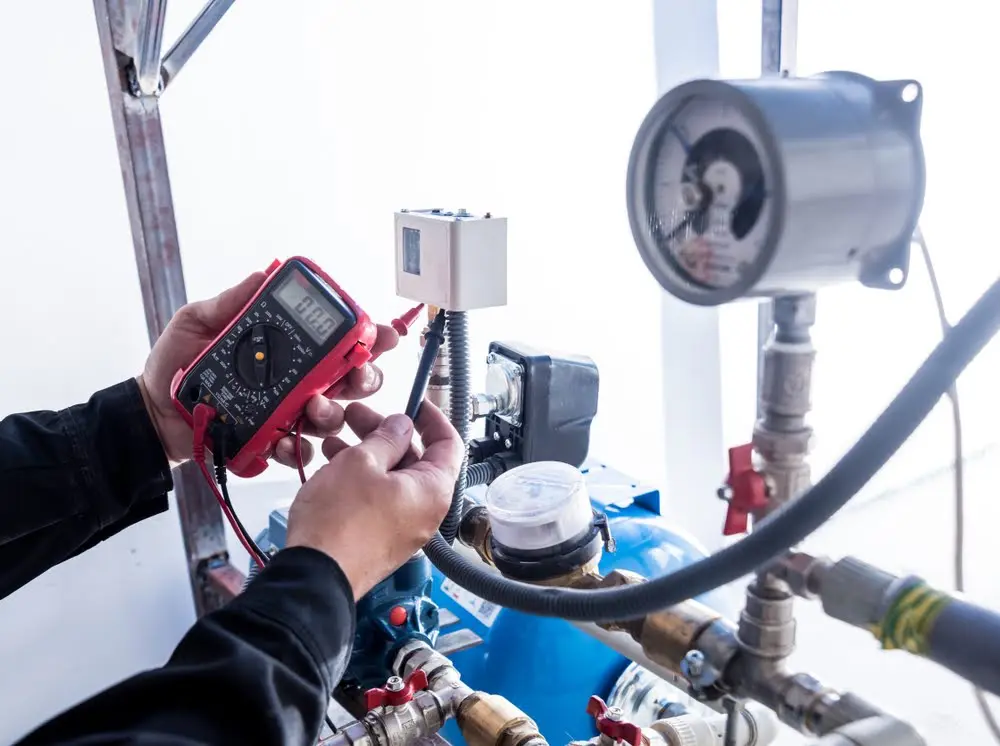
Modern water treatment facilities rely on accurate instrumentation and seamless communication between monitoring equipment and control systems to maintain safe water quality. To make this possible, sensors and transmitters throughout a treatment system must continuously send measurement data to controllers, monitoring systems, and automation platforms. One of the most widely used methods for transmitting this information is the 4-20 milliamp (mA) signal, a standardized electrical current signal that represents process measurements such as chlorine concentration, flow rate, pressure, or pH levels.
By using this reliable communication method, water treatment systems can monitor conditions in real time and automatically adjust chemical feed equipment when needed. This helps operators maintain regulatory compliance, optimize treatment efficiency, and ensure consistent water quality.
Let’s take a closer look at how the 4-20 mA signal works and why it remains the industry standard.
The Basics of the 4-20 mA Signal
A 4-20 mA signal is a standardized electrical current loop used to transmit measurement data from sensors or transmitters to receiving devices such as controllers, programmable logic controllers (PLCs), or monitoring systems.
In this system, the measured value is represented by a current within the 4 to 20 milliamp range. The lower end of the scale, 4 mA, represents the minimum value of the measurement range, while 20 mA represents the maximum value.
For example, consider a chlorine analyzer measuring concentrations from 0 to 5 parts per million (ppm). In this case:
- 4 mA would represent 0 ppm
- 20 mA would represent 5 ppm
- 12 mA would represent 2.5 ppm, which is halfway through the measurement range
Because the signal is continuous, it allows the system to represent any value within that range with precision.
The 4-20 mA current loop is used widely in industrial instrumentation because it is simple, reliable, and compatible with a broad range of sensors and control equipment. Most importantly, it allows measurement devices to send accurate information to monitoring systems without requiring complex communication protocols.
Why 4-20 mA Signals Are Used in Industrial Systems
Transmits Accurate Data
One of the primary reasons this signal type remains widely used is its ability to transmit accurate data over long distances. Water treatment facilities often include equipment distributed across large plants, pump stations, or remote monitoring sites. 4-20 mA current signals maintain accuracy across these distances without significant signal degradation.
Resistance to Electrical Noise
Industrial environments frequently include motors, pumps, variable frequency drives, and other electrical equipment that can generate interference. Voltage-based signals are often affected by this noise, which can distort measurement readings. Because 4-20 mA signals rely on current rather than voltage, they are far less susceptible to electrical interference.
Consistency
The standardized signal range allows transmitters and receiving devices from different manufacturers to communicate effectively. This compatibility helps ensure reliable data transmission throughout the system.
System Fault Detection
Because the lowest normal signal value is 4 mA rather than 0 mA, a reading below 4 mA typically indicates a problem such as a broken wire, device malfunction, or power failure. This capability allows operators and control systems to quickly identify communication issues.
How 4-20 mA Signals Support Water Quality Monitoring
Water treatment systems rely on continuous monitoring of critical parameters to ensure safe and effective operation. Sensors and analyzers installed throughout a facility measure a variety of conditions and transmit those measurements using standardized signals.
Common water quality measurements transmitted via 4-20 mA signals include:
- Chlorine concentration
- Flow rate
- Pressure
- pH levels
- Oxidation-reduction potential (ORP)
- Water temperature
- Tank levels
By continuously transmitting these signals, sensors provide real-time visibility into system performance. Operators can quickly identify changes in water quality or process conditions and take corrective action when necessary.
For example, a chlorine analyzer (such as the RPH-250 residual analyzer or the RPH-260 analyzer) may measure the residual disinfectant level in a water distribution system. The analyzer converts the measurement into a corresponding 4-20 mA signal and sends that signal to a controller. The controller then interprets the current value and displays the measurement for operators or uses the information to regulate chemical dosing equipment.
Similarly, flow sensors may send a 4-20 mA signal representing water flow through a pipeline. This data allows operators to adjust pump speeds or chemical injection rates to maintain proper treatment conditions.
Integration With Control Systems and Automation
Modern water treatment facilities often rely on automation to improve efficiency, maintain consistent treatment performance, and reduce manual intervention. The 4-20 mA signal plays a crucial role in enabling this level of automation.
These signals are commonly connected to programmable logic controllers (PLCs) or supervisory control and data acquisition (SCADA) systems, which collect and process data from multiple sensors throughout a facility.
By integrating water quality monitoring equipment with automation platforms, facilities can maintain precise control over treatment processes and respond quickly to changing conditions.
Enhance Your Water Treatment Operations With Reliable Control Systems
Accurate instrumentation and reliable communication systems are fundamental to effective water treatment operations. And the 4-20 mA signal will remain a cornerstone of industrial monitoring because of its reliability, durability, and compatibility with a wide range of sensors and control systems.
For water treatment operators, engineers, and system designers seeking dependable chemical feed equipment and monitoring solutions, turn to Hydro Instruments. We provide advanced systems designed for reliability and performance. Our top solutions include gas feed systems, liquid feed systems, gas detectors, and automatic control valves (including the Omni-Valve 110 and the Omni-Valve 1000).
Contact Hydro Instruments to learn more about our chemical feed technologies, monitoring equipment, and support services that help ensure safe, efficient water treatment operations.

Comments are closed.